The Heat Pump Water Heater Market reached an estimated USD 13.58 Billion in 2025 and is positioned to grow from USD 13.87 Billion in 2026
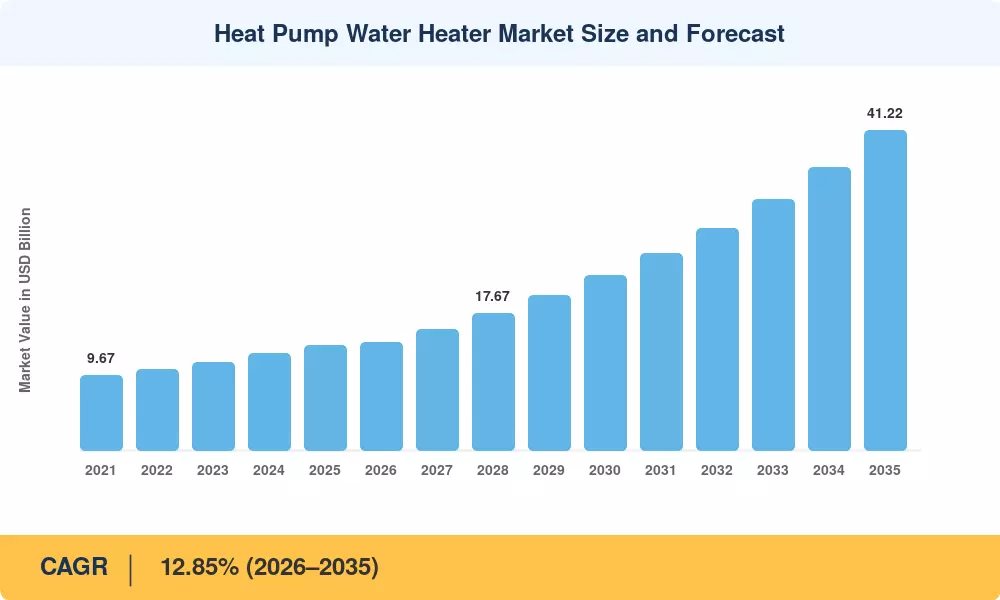
NEW YORK, NY, UNITED STATES, July 27, 2026 /EINPresswire.com/ — The Heat Pump Water Heater Market reached an estimated USD 13.58 Billion in 2025 and is positioned to grow from USD 13.87 Billion in 2026 to USD 41.22 Billion by 2035, registering a CAGR of 12.85% during the forecast period.
Market Overview
Heat pump water heaters (HPWHs) represent a highly efficient alternative to conventional electric resistance or gas-fired water heating systems. Unlike traditional methods that generate heat directly, these systems use electricity to extract thermal energy from ambient sources—typically air, water, or the ground—and transfer it to water for domestic or commercial use . This process makes HPWHs two to three times more energy-efficient than conventional water heaters. Since water heating accounts for nearly 19% of residential energy consumption, widespread adoption of HPWHs can significantly reduce energy usage and greenhouse gas emissions .
The market’s exceptional growth trajectory is driven by several powerful catalysts. The global push toward decarbonization and energy efficiency is primary, with HPWHs capable of reducing primary energy consumption by up to 70% compared to fossil-fuel-based systems . Rising electricity and fuel prices are prompting households and commercial entities to seek cost-effective, long-term heating solutions . Government incentives and rebates for energy-efficient appliances in over 30 countries are reducing upfront costs and encouraging consumer adoption . Additionally, stringent building energy codes and emission norms are mandating high-efficiency water heating systems in new constructions .
Industry trends indicate a significant shift toward smart, connected, and sustainable solutions. Smart heat pump water heaters with Wi-Fi connectivity and energy usage tracking are gaining traction, enabling users to monitor performance and optimize energy consumption remotely through mobile apps . Integration with solar PV systems is becoming more common, allowing homeowners to maximize renewable energy usage and reduce electricity bills further . Hybrid systems that combine heat pumps with electric or gas backup heaters are emerging to provide consistent performance during peak demand or in extreme weather conditions .
Technological developments are rapidly expanding the market’s reach and performance. Manufacturers are developing CO2-based and R290 refrigerant systems to meet environmental standards and improve efficiency, particularly in cold climates where traditional models underperform . Compact and wall-mounted heat pump units are being designed to cater to urban households and apartments where space is limited, expanding the addressable market . Enhanced inverter compressor technology is improving performance even in colder climates, breaking barriers to adoption in traditionally gas-dominant regions .
Policy and regulatory influence on the market is substantial and growing. Many governments offer incentives and subsidies to encourage the adoption of heat pump water heaters, alongside regulations requiring new buildings to install energy-efficient systems . The U.S. offers tax credits and rebates through initiatives like the Inflation Reduction Act, while the European Union’s stringent energy performance standards and decarbonization targets are driving market growth . China’s Five-Year Plan focusing on high-efficiency heat pumps is a key driver in the Asia-Pacific region .
The demand outlook remains exceptionally strong, with the market poised for sustained double-digit growth. Asia-Pacific dominates the global market with an estimated 43% share in 2025 , driven by rapid urbanization, rising disposable income, and stringent energy efficiency regulations . North America follows closely, with a growing focus on sustainability and government incentives promoting adoption . Europe is investing heavily in heat pump manufacturing, with over USD 4 billion committed to production expansion .
📍 Get Free Sample Report for Detailed Market Insights:
https://www.marketresearchfuture.com/sample_request/28445
Market Segmentation
By Technology
The market is segmented by technology into Air-Source, Water-Source, and Ground-Source (Geothermal) systems . Air-source heat pumps dominate the market and are expected to contribute approximately 92.42% of global share in 2026 due to easier installation and broad applicability across residential and commercial sectors . These systems extract heat from ambient air and are suitable for moderate to warm climates. Ground-source (geothermal) heat pumps offer stable underground temperature efficiency but involve higher installation complexity and cost. Water-source systems, which extract heat from water bodies, represent a smaller but growing segment.
By Capacity
Capacity segmentation includes Up to 200 L, 200–500 L, and Above 500 L . The 10 kW to 30 kW capacity segment is expected to hold approximately 48.2% share in 2026, widely used in commercial applications such as hotels and restaurants . Smaller capacity units (up to 200 L) suit single-family and light commercial use with frequent cycle operation. Mid-range capacities balance performance and footprint for multi-family dwellings, while larger tanks support high-demand commercial loads and industrial preheat requirements .
By End-User
End-user segmentation covers Residential, Commercial, and Industrial sectors . The residential segment is expected to lead with approximately 56.84% share in 2026, driven by cost sensitivity and energy savings . The commercial segment is experiencing strong adoption in hotels, hospitals, and hostels due to 60-80% energy savings . The industrial segment is gradually adopting HPWHs for large-scale applications where scale economies and bespoke engineering dominate .
By Distribution Channel
Distribution channel segmentation includes B2C Retail and B2B Direct Sales . Offline channels encompass distributors, HVAC contractors, retailers, and specialty stores, each with unique purchase drivers and service expectations. Online channels are gaining traction, requiring robust digital content, logistics coordination, and clear warranty policies to reduce perceived risk . B2B direct sales dominate commercial and industrial installations, where customized solutions and long-term service agreements are paramount.
By Region
Regional segmentation includes North America, Europe, Asia Pacific, South America, and the Middle East and Africa. Asia Pacific leads the global market, with an estimated 43% share in 2025 . China dominates the region, supported by its Five-Year Plan focusing on high-efficiency heat pumps . North America is experiencing steady growth driven by energy-efficiency standards and rising consumer preference for cost-saving solutions. Europe is investing heavily in heat pump manufacturing, with Germany and the UK being key markets .
🛒 You can buy this market report at:
https://www.marketresearchfuture.com/checkout?currency=one_user-USD&report_id=28445
Regional Analysis
North America
North America represents a significant and growing market for heat pump water heaters, driven by energy efficiency standards and a rising consumer preference for cost-saving solutions. The U.S. market was valued at approximately USD 0.57 billion in 2026 and is projected to reach USD 0.77 billion by 2032 . The Inflation Reduction Act’s industrial efficiency incentives, including tax credits and rebates for energy-efficient appliances, have shortened capital payback cycles for HPWH replacements. The region benefits from a strong retrofit market and a mature installation ecosystem with growing HVAC contractor training programs . Climatic diversity across the region drives differentiated product requirements, with cold-climate variants and control strategies that ensure frost protection seeing greater demand in northern states and Canada.
Europe
Europe represents a highly sophisticated market, shaped by stringent regulatory rigor and aggressive decarbonization targets. The region is investing heavily in heat pump manufacturing, with over USD 4 billion committed to production expansion . Building codes and procurement standards increasingly prioritize lifecycle efficiency and low global warming potential refrigerants . Germany leads regional demand, valued at approximately USD 0.2 billion in 2026, driven by its Energiewende-adjacent industrial modernization programs . The UK follows at approximately USD 0.07 billion, supported by its Net Zero industrial strategy. High energy prices across the continent have made lifecycle-cost arguments more persuasive than ever for HPWH procurement committees.
Asia-Pacific
Asia-Pacific dominates the global heat pump water heater market with an estimated 43% share and a valuation of approximately USD 1.03 billion in 2025 . China accounts for the largest share within the region, valued at approximately USD 0.63 billion in 2026, supported by its Five-Year Plan focusing on high-efficiency heat pumps . India is the fastest-growing major market, with rapid urbanization and the expansion of its domestic pharmaceutical and manufacturing sectors driving adoption. Japan contributes approximately USD 0.21 billion in 2026, with its electronics and precision manufacturing sectors demanding advanced HPWH solutions. Southeast Asian countries, with urbanization rates exceeding 4% annually, present significant growth opportunities as infrastructure development and electrification projects gain momentum .
Rest of the World
The Rest of the World segment, encompassing South America, the Middle East, and Africa, presents developing market opportunities. The Middle East and Africa region shows moderate growth as governments promote renewable energy solutions to reduce reliance on traditional energy sources . Cooling-dominated climates highlight the value of high-temperature lift capability and corrosion-resistant components . Latin America is experiencing steady growth, particularly in Brazil and Argentina, driven by increasing focus on energy efficiency and the transition toward sustainable technologies . Infrastructure challenges and varying regulatory frameworks moderate overall growth rates in these regions.
Competitive Landscape / Key Players
The heat pump water heater market is characterized by the presence of several global and regional players competing on technology, energy efficiency, product design, and service capabilities. Key companies operating in this market include Daikin Industries Ltd., Panasonic Corporation, LG Electronics, Rheem Manufacturing Company, Ariston Holding N.V., Rinnai Corporation, STIEBEL ELTRON GmbH & Co. KG, A. O. Smith, Mitsubishi Electric, and Johnson Controls .
Strategic developments in the market include significant product launches and technological innovations. In January 2024, LG Air Conditioning Technologies USA expanded its range of state-of-the-art HVAC water products, featuring the new LG R32 Air-to-Water Heat Pump Monobloc system designed for easy installation with integrated indoor and hydronic components . The system efficiently produces hot water for various applications while incorporating noise reduction features for quieter operation, showcasing the trend of increasing eco-friendly initiatives in the HVAC industry .
Competitive differentiation increasingly hinges on energy efficiency ratings, smart connectivity features, cold-climate performance, and aftermarket service networks. Companies are investing in R&D for CO2-based and R290 refrigerant systems to meet environmental standards . Manufacturers are also focusing on developing compact, wall-mounted units suitable for urban households where space is limited . Strategic partnerships and acquisitions are accelerating innovation cycles, with key players forming alliances with technology providers to integrate advanced controls and smart home ecosystems .
Latest Industry News & Developments
Recent industry developments highlight the ongoing transformation of the heat pump water heater market toward greater efficiency, connectivity, and sustainability. In January 2026, several countries increased subsidies for energy-efficient appliances, propelling consumer demand and accelerating market growth . Leading manufacturers introduced compact, high-performance models suitable for urban housing, where space constraints were previously a limitation .
Smart connectivity features, such as app-based controls and energy consumption analytics, gained popularity among tech-savvy homeowners . Commercial installations also grew steadily, especially in hotels, hospitals, and multi-residential buildings seeking to reduce energy costs . Hybrid heat pump models combining traditional heating methods with renewable technology entered the market, offering flexible and climate-adaptive solutions .
In June 2026, the U.S. Department of Energy published updated test procedures for heat pump water heaters under 10 CFR 431, establishing stricter minimum efficiency standards effective January 2027. This regulatory development is accelerating replacement cycles across residential and commercial facilities.
Market Challenges & Opportunities
Key restraints facing the heat pump water heater market include high upfront installation costs compared to conventional water heaters. Air-source heat pumps typically cost between USD 3,000 and USD 6,000, while geothermal systems are even more expensive, with additional expenses for insulation upgrades and heat distribution systems increasing capital requirements . Limited consumer awareness about the benefits of heat pump water heaters remains a barrier, as many households and small businesses are unfamiliar with the technology and its long-term cost savings . The efficiency of HPWHs in colder climates has historically been a concern, though technological advancements are addressing this issue . The lack of skilled technicians for installation and maintenance in some regions, particularly in developing markets, further constrains adoption .
Emerging opportunities in the market are substantial and diverse. The integration of smart home ecosystems and advanced control systems presents significant potential, with connected HPWHs offering remote monitoring, energy optimization, and demand-response capabilities . The adoption of CO2-based and R290 refrigerant systems will improve performance and environmental compliance, particularly in cold climates where traditional models underperform . Emerging markets in Southeast Asia, Latin America, and Africa present strong growth opportunities as infrastructure development and electrification projects gain momentum . The integration with solar PV systems will allow homeowners to maximize renewable energy usage and reduce electricity bills further .
Future potential lies in the development of digital twins and AI-driven autonomous operations, which will optimize system performance and predictive maintenance schedules. Platform consolidation and software ecosystems will transition the industry from hardware-centric to software-defined models, with open-API architectures enabling deeper integration with building management systems. Sustainability as a competitive differentiator will drive adoption of low-global-warming-potential refrigerants and energy-efficient designs. The circular economy and remanufacturing programs for heat pump components will gain traction as extended producer responsibility frameworks expand across Europe and Japan.
To explore more market insights, visit us at:
https://www.marketresearchfuture.com/reports/heat-pump-water-heater-market-28445
Final Market Summary
The heat pump water heater market is positioned for exceptional growth through 2035, driven by decarbonization mandates, rising energy costs, technological advancements, and expanding government incentives. The projected valuation of USD 41.22 billion reflects rapidly expanding adoption across residential, commercial, and industrial sectors, with the market transitioning from niche energy-efficient solution to mainstream water heating technology.
The medium-term growth outlook remains exceptionally strong, with the market registering a robust CAGR of 12.85% during the forecast period. Asia-Pacific will continue to lead market expansion through China’s policy-driven adoption and India’s infrastructure build-out, while North America and Europe maintain significant positions through technology leadership and regulatory-driven replacement cycles. The ongoing development of smart, connected HPWH systems with advanced refrigerants and cold-climate performance will continue to expand market possibilities and applications.
Long-term industry potential extends significantly beyond the current forecast horizon. The convergence of electrification mandates, digital transformation, and sustainability requirements will continue to reshape the market landscape. Green hydrogen integration, where HPWHs can utilize hydrogen-produced electricity for zero-carbon water heating, represents a frontier opportunity. Manufacturers that successfully develop software-defined, cloud-connected solutions, invest in AI-driven performance optimization, and establish regional service networks in emerging markets will capture substantial value in this rapidly evolving market. The transformation of water heating from energy-intensive to energy-efficient, from passive to intelligent, represents one of the most significant developments in building decarbonization, fundamentally changing how buildings and industries achieve their sustainability goals.
More Related Reports from MRFR Library:
Printing Machinery Market: https://www.marketresearchfuture.com/reports/printing-machinery-market-11855
Vending Machine Market: https://www.marketresearchfuture.com/reports/vending-machine-market-12005
Wastewater Treatment Services Market: https://www.marketresearchfuture.com/reports/wastewater-treatment-services-market-12043
By Pass Lubrication Filter Market: https://www.marketresearchfuture.com/reports/by-pass-lubrication-filter-market-12047
Industrial Maintenance Services Market: https://www.marketresearchfuture.com/reports/industrial-maintenance-services-market-12074
Self Contained Breathing Apparatus Market: https://www.marketresearchfuture.com/reports/self-contained-breathing-apparatus-market-12109
Additive Manufacturing Machine Market: https://www.marketresearchfuture.com/reports/additive-manufacturing-machine-market-12188
Reverse Vending Machine Market: https://www.marketresearchfuture.com/reports/reverse-vending-machine-market-12194
Industrial Machinery Equipment Tools Market: https://www.marketresearchfuture.com/reports/industrial-machinery-equipment-tools-market-12404
Crushing Screening Mineral Processing Equipment Market: https://www.marketresearchfuture.com/reports/crushing-screening-mineral-processing-
equipment-market-12413
Jayanta Shah
WantStats Research and Media Pvt. Ltd.
+91 95953 92885
email us here
Legal Disclaimer:
EIN Presswire provides this news content “as is” without warranty of any kind. We do not accept any responsibility or liability
for the accuracy, content, images, videos, licenses, completeness, legality, or reliability of the information contained in this
article. If you have any complaints or copyright issues related to this article, kindly contact the author above.

Media gallery