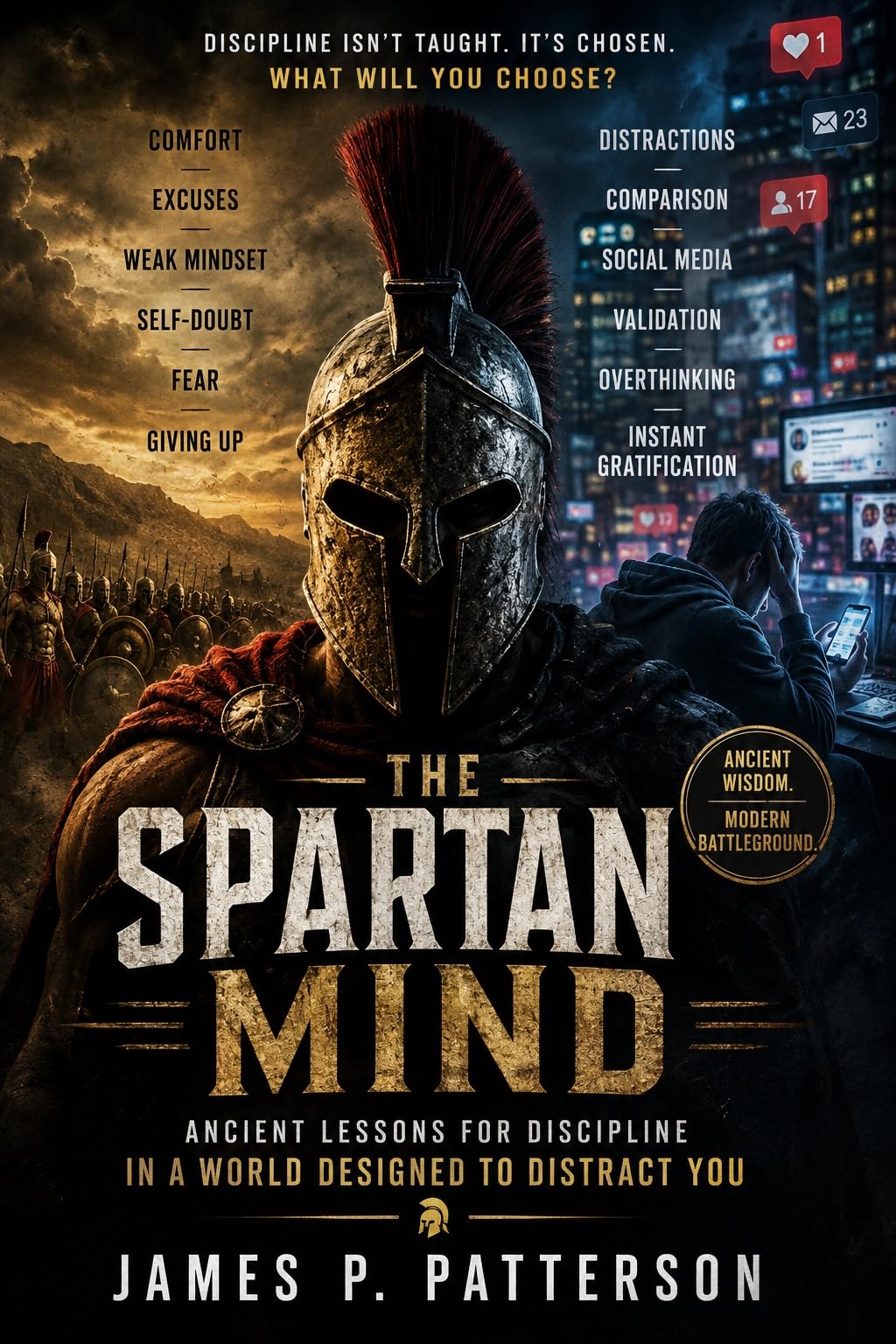
James P. Patterson draws on lessons from ancient Sparta to explore focus, resilience, accountability, and deliberate growth in an age of constant distraction.
NEW YORK CITY, NY, UNITED STATES, August 22, 2026 /EINPresswire.com/ — James P. Patterson examines an increasingly familiar modern struggle in The Spartan Mind: Ancient Lessons for Discipline in a World Designed to Distract You, a personal development book connecting principles associated with ancient Sparta to the challenges of contemporary life. In a culture filled with constant information, comparison, convenience, and competing demands for attention, Patterson considers how structure and discipline can help individuals become more intentional about their choices. Rather than encouraging readers to imitate ancient Spartans, the book uses their emphasis on discipline as a framework for examining modern behavior.
The Spartan Mind: Ancient Lessons for Discipline in a World Designed to Distract You explores structure, repetition, identity, accountability, resilience, and personal standards as tools for building a more deliberate life. Patterson addresses the hidden costs of comfort and distraction while examining common obstacles such as procrastination, perfectionism, self-doubt, fear, comparison, and the need for outside validation. The book encourages readers to distinguish between what they can and cannot control, establish meaningful standards for themselves, and continue acting toward important goals even when motivation or confidence is uncertain.
Patterson developed The Spartan Mind: Ancient Lessons for Discipline in a World Designed to Distract You by bringing together his study of ancient Sparta with psychological themes explored through his Trap Series. His approach does not romanticize the brutality of Spartan society or suggest that personal strength requires becoming emotionless, fearless, or invulnerable. Instead, he focuses on principles that can be examined in a modern context, particularly the role of consistent habits, clearly defined expectations, personal identity, and accountability in helping people remain steady when circumstances become difficult or distractions multiply.
For readers struggling to protect their attention or feeling that they should have progressed further in life, The Spartan Mind: Ancient Lessons for Discipline in a World Designed to Distract You offers a framework centered on purposeful action rather than perfection. Patterson presents discipline not as punishment, but as the capacity to keep choosing the person one intends to become despite shifting emotions, challenging circumstances, or external pressures. The book also examines the importance of building a dependable personal support system and developing an individual code capable of providing direction through demanding seasons.
James P. Patterson brings his interest in ancient Sparta and human psychology together in The Spartan Mind: Ancient Lessons for Discipline in a World Designed to Distract You. His central premise is deliberately practical: modern readers do not need to become Spartans to learn from principles associated with discipline, resilience, and focused action. By translating those concepts into questions about attention, identity, fear, comfort, and personal responsibility, Patterson encourages readers to become harder to distract, harder to discourage, and more intentional about the lives they are creating.
The book is now available. Secure your copy here: https://a.co/d/016Ay6yq
For review copies, interview requests, or additional information, please contact:
James P. Patterson
BrightKey PR
forgottenthronestv@gmail.com
Legal Disclaimer:
EIN Presswire provides this news content “as is” without warranty of any kind. We do not accept any responsibility or liability
for the accuracy, content, images, videos, licenses, completeness, legality, or reliability of the information contained in this
article. If you have any complaints or copyright issues related to this article, kindly contact the author above.

Media gallery